M&A Isn’t Engineering. It’s Biology.
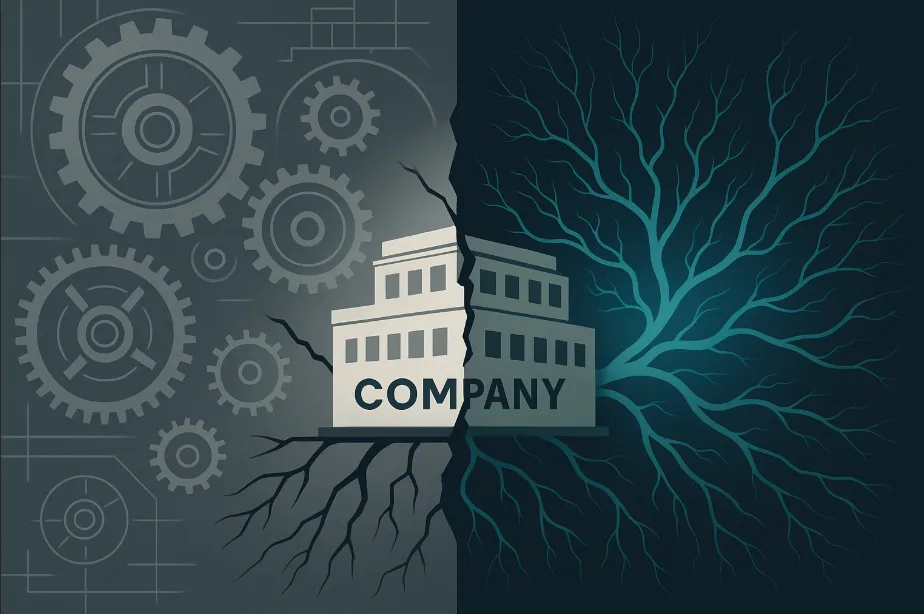
If you think you’re buying a machine, don’t be surprised when the gears jam.
The Brutal Math of M&A Failure
Every year, study after study reminds us of the sobering truth: the majority of M&A transactions fail to create value. According to an analysis of 2500 such deals, more than 60% of them destroy shareholder value [1]. Boards tell themselves these failures come from “overpaying” or “integration missteps.” The reality is more primal: they killed the system by treating it like an object.
Companies Are Organisms, Not Machines
Companies breathe through culture, metabolize through systems, and regenerate through people. Yet most buyers step into diligence like engineers evaluating a pump: Does it run? What’s the output per unit of energy? Replace the worn part, upgrade the software, and we’re good. That reductionist lens is exactly what suffocates a business once the papers are signed.
The Heinz Collapse
In 2013, Warren Buffett’s Berkshire Hathaway and 3G Capital acquired H.J. Heinz for $23 billion, later merging it with Kraft Foods to form Kraft Heinz in 2015 [2]. On paper, the machine logic looked flawless: cut “fat,” consolidate plants, squeeze margins. For a few years, Wall Street applauded. But biology was working against them. Aggressive cost-cutting gutted innovation budgets, talent fled, and culture collapsed. By 2019, Kraft Heinz wrote down $15.4 billion in brand value. The stock that day plunged 27%, erasing billions in market cap [3]. What was hailed as the deal of the decade has now devolved into calls for demergers. It was an acknowledgment that the “synergy machine” destroyed the very organism it was meant to supercharge.
Culture Is Structural, Not Cosmetic
The lesson is not “integration is hard”. The lesson is: starve an organism of oxygen and it dies, no matter how good your spreadsheets look. Culture is not cosmetic, it is structural. When Heinz slashed the rituals, processes, and creative slack that kept its brands alive, they didn’t just trim fat; they amputated muscle and severed arteries.
Buyers believe they can own a company the way they own a car. In truth, they’ve entered into a stewardship of something already alive. And like any organism, mishandling it can kill it.
Caprae’s Contrarian Lens
At Caprae, our DNA is built on refusing these illusions. We ask: If this company were a living system, what would happen if we disrupted its metabolism? Would it adapt or collapse? This framing is not philosophy for us; it is discipline.
Our rule is simple: if you think you’re buying customers and contracts, you’re buying a skeleton. If you think you’re buying a system that can regenerate outcomes without its founder present, then you’re closer to the truth.
The Industry’s Unfiltered Reality
The psychological gut-check for every acquirer is uncomfortable but necessary: Would you know if you were the toxin? Many don’t ask this, and they end up as the pathogen that kills the host.
The unfiltered reality is brutal: M&A history is littered with once-admired deals that are now case studies in cultural malpractice. Daimler-Chrysler. AOL-Time Warner. Jet-Walmart. Each promised mechanical synergy. Each ignored the organism. Each ended as a dissection, not a merger.
Caprae exists to say what others won’t: buying a company is not engineering; it’s biology. If you can’t see the difference, you’re not buying growth—you’re buying decay.
Footnotes
Lewis, A., & McKone, D. (2016). So Many M&A Deals Fail Because Companies Overlook This Simple Strategy. Harvard Business Review.
H.J. Heinz Company and Kraft Foods Group (2015, March 25). H.J. Heinz Company and Kraft Foods Group Sign Definitive Merger Agreement to Form The Kraft Heinz Company. The Kraft Heinz Company.
Reuters (2019). Kraft Heinz’ problems shine light on controversial budget tool.