Investor Market Quality: When “Open Capital” Breeds Adverse Selection
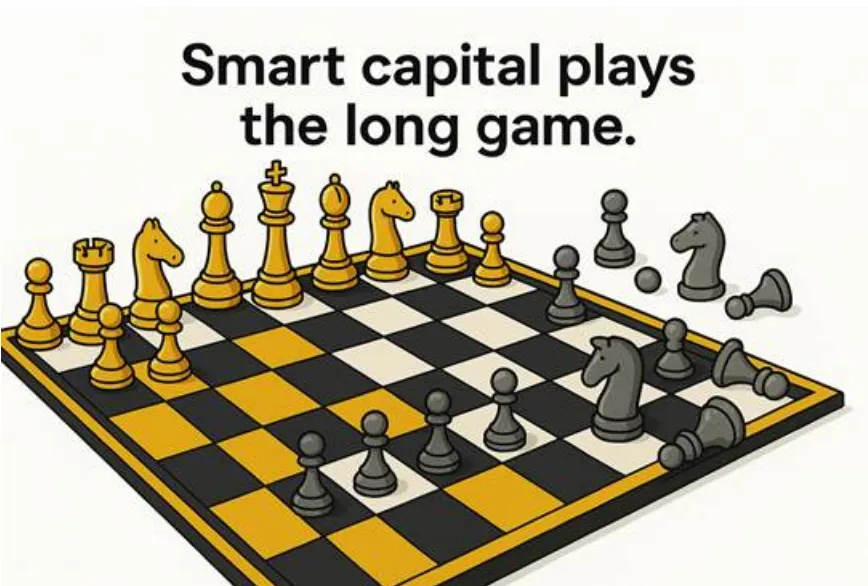
The past few years made raising money feel like ordering takeout: fast, easy, and often regrettable. “Open capital” promised democratized access, but abundance doesn’t equal quality. In venture and private equity alike, not all money is helpful. Sometimes, the wrong money destroys what the right partner could have built.
The Mirage of Open Capital
During the 2021 boom, U.S. startups raised a record $330 billion+ in venture funding.1 Capital flooded the system so quickly that many founders stopped asking who was behind the check. A year later, as liquidity dried up, investors vanished, bridge rounds collapsed, and founders learned that the easiest money often carried the hardest lessons.
Even elite funds now see the shift. A Business Insider report notes that founders are “getting choosier about whose money they’ll take,” insisting on investors who bring more than cash.2 Data supports it: fewer than half of startups accept the highest bid when fundraising.3 The “best” money isn’t the biggest check, it’s the most aligned and disciplined capital.
Economists call this adverse selection, when information asymmetry and excess liquidity cause weaker players to dominate the market.4 In plain English: when money becomes too free-flowing, it funds exactly what strong investors avoided. “Any investor dumb enough to miss a red flag,” one VC quipped, “is the last person you’d want on your cap table”.
When Money Turns Toxic
The damage shows up in boardrooms, not spreadsheets. Take the case of Ben, a founder profiled by The Hustle. After raising a major VC round, his startup received an $88 million acquisition offer. It was a life-changing exit by any measure. But one investor, armed with veto rights, blocked the deal, insisting on holding out for a bigger payoff. That payoff never came. Growth slowed, key team members left, and the company ultimately sold for a fraction of the original offer. The capital that once felt empowering became an anchor, proof that the wrong partner can turn victory into slow collapse.5
These stories share a pattern: founders’ diligence everything except the investor. As one veteran warns, “Don’t accept money until you’ve decided whether you want to accept the person behind it”.6 A hasty yes can turn a lifeline into an anchor.
Screening for Smart Capital
We believe that a filter is needed for what we call smart dollars. Our principle: survival beats speed. We evaluate potential partners (and LPs) on three dimensions:
Decision Latency: A fast no is better than a slow maybe. High-latency investors, those who dither or follow consensus, kill momentum. Great partners move quickly and thoughtfully.
Reserves Discipline: Avoid partners who over-promise and under-deliver. The best investors keep dry powder for tough times, deploying it deliberately rather than chasing hype or fleeing at the first headwind.
Post-Close Operating Help: Capital alone doesn’t build companies, execution does. The strongest LPs provide operational lift: hiring support, strategic guidance, market access, and real mentorship “Growth requires guidance and infrastructure as well as money”, as Startup Grind aptly put it.
By filtering who joins our cap table, we avoid the “yes-to-anyone” trap that fuels adverse selection. It sometimes slows fundraising, but the right money, on the right terms, always beats fast money on the wrong ones.
Survival beats Speed always
FOMO (fear of missing out) drives many funding mistakes. Founders accept cash simply because it’s available, not because it’s aligned. Yet, as the saying goes, “nothing good comes out of desperation”.
The question every founder should ask: Are we taking this money because it’s there, or because it advances the mission? The survivors chose patient, principled capital over the fastest check.
Believe in one mantra: if something feels off about the deal, trust your gut. Walk away. Survival beats speed, every time.
References
Reuters (2023), “U.S. VC Funding Cools from 2021...